A five-year roadmap for transforming the lives of Cameroonian youth through integrated, evidence-based programs in education, health, livelihoods, and civic engagement.
Cameroon is home to one of the youngest populations in the world, with over 60% of its citizens under the age of 25. This demographic reality presents both an extraordinary opportunity and an urgent challenge: to invest in youth development now, or to risk squandering the potential of an entire generation. CABY’s Strategic Plan 2024-2028 is our response to this challenge — a bold, comprehensive roadmap for scaling our impact, deepening our partnerships, and transforming the lives of tens of thousands of Cameroonian youth over the next five years.
This plan is the result of extensive consultations with youth, community leaders, government officials, partner organizations, and CABY’s own staff and board. It reflects our collective ambitions, our honest assessment of the challenges ahead, and our determination to achieve lasting, systemic change for Cameroonian youth.

Understanding the scale of the challenge is the first step toward addressing it.
An estimated 275 million young people aged 15-35 reside in Sub-Saharan Africa, representing the world's largest and fastest-growing youth cohort — a generation that will shape the continent's future.
Cameroon's total population of approximately 36 million is characterized by a youth bulge, with over 60% of citizens under the age of 25 — making youth development the defining national priority of our time.
The youth unemployment rate in Cameroon stands at approximately 21%, with significantly higher rates in rural areas and among women. Lack of economic opportunity remains a primary driver of youth vulnerability.
Through our programs to date, CABY has directly reached 5,345 young people across the South West Region — proving the effectiveness of our model and building the foundation for national scale-up.
Population projections indicate that Cameroon’s population will reach 284 million by 2050 and 296 million by 2100, driven largely by continued high fertility and improving child survival. This demographic trajectory underscores the urgent need for sustained, scaled investment in youth development — and the immense potential of a well-supported Cameroonian youth population to drive national prosperity and regional leadership.
CABY’s strategic plan is shaped by a clear-eyed analysis of the challenges and opportunities in the Cameroonian context.
High youth unemployment drives vulnerability to substance abuse, early marriage, and radicalization — creating urgent demand for CABY's intervention programs.
Substance abuse rates among Cameroonian youth are increasing, driven by unemployment, displacement, peer pressure, and limited access to mental health services.
Cameroon's youth bulge creates immense potential — if harnessed through education, skills training, and civic engagement — to drive economic growth and social transformation.
Youth-focused services — counseling, vocational training, health clinics — remain severely underfunded and inaccessible to the majority of Cameroonian youth, particularly in rural areas.
“The youth of Cameroon are not the leaders of tomorrow — they are the changemakers of today. CABY exists to give them the tools, the platform, and the support they need to lead transformative change in their communities right now.”
— CABY Leadership Team, Strategic Plan 2024-2028CABY’s strategic evolution over the past decade reflects a fundamental paradigm shift in how we conceptualize and deliver youth development. We have moved decisively away from a charity-based, deficit model — which positions youth as passive recipients of aid — toward a transformative, asset-based approach that recognizes and builds upon the inherent strengths, agency, and potential of young Cameroonians.
This shift has profound implications for how we design programs, measure success, and engage with communities. Rather than asking “what do youth lack?” we now ask “what do youth already have, and how can we help them leverage those assets to drive change?” This reorientation places young people at the center of the change process.
Programs designed with youth, rather than for youth, achieve higher participation rates, greater community ownership, and more sustained behavioral change. Young people who are engaged as agents of change become advocates for the program within their communities, multiplying our reach and impact far beyond what we could achieve through top-down delivery alone.
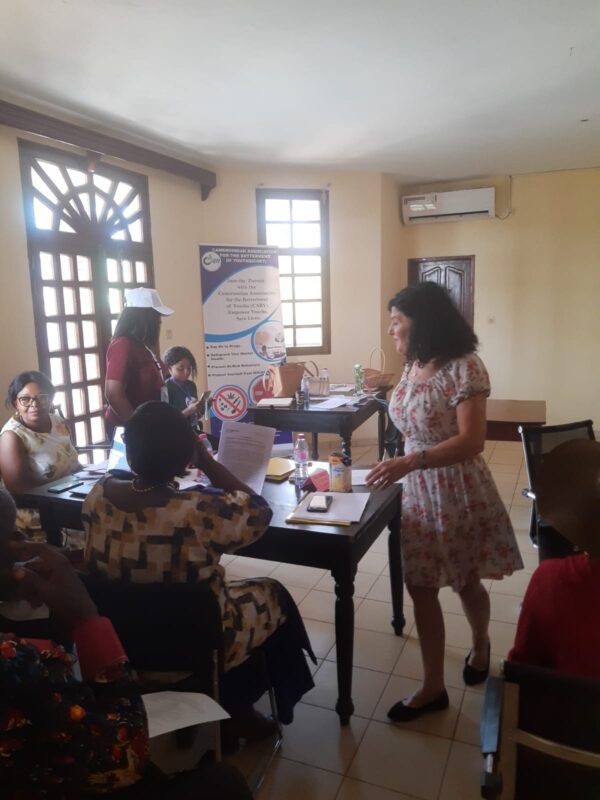
Central to CABY’s strategic approach is an unwavering commitment to building the capacity and resilience of young Cameroonians — equipping them not just with skills for today’s job market, but with the adaptive capacities they will need to navigate an uncertain and rapidly changing world. Our capacity-building programs operate at three levels:
CABY believes that transformative change begins with honest, open, and courageous dialogue — between youth and adults, between communities and institutions, and between different generations and perspectives. Our dialogue programs create safe, structured spaces where these conversations can happen, guided by trained facilitators and grounded in evidence-based dialogue methodologies.
Through community forums, inter-generational dialogues, school-based discussion programs, and digital engagement platforms, CABY facilitates conversations on the most pressing issues facing Cameroonian youth: unemployment, drug abuse, gender inequality, civic participation, and the impact of the ongoing security crisis.
Critically, CABY’s dialogue programs are designed to be transformative — not just informative. We use participatory methodologies that challenge assumptions, build empathy, and motivate action. Participants leave not just better informed, but more motivated and better equipped to make positive changes in their own lives and communities.
CABY recognizes the transformative power of media and communication in shaping attitudes, behaviors, and social norms. Our media strategy goes beyond traditional awareness campaigns to encompass a comprehensive, multi-platform approach to youth communication that builds community, mobilizes action, and amplifies youth voices in the national conversation.
CABY’s programs directly address the most prevalent at-risk behaviours among Cameroonian youth, providing prevention, early intervention, and rehabilitation support.
Our flagship prevention program addresses substance abuse through school-based education, peer counseling, community awareness campaigns, and advocacy for evidence-based national drug policies. We target youth aged 12-25, with a focus on high-risk environments. Program includes: school-based curriculum, peer educator networks, family counseling, and rehabilitation referral pathways.
Unemployment and poverty are root drivers of at-risk behaviour. Our vocational training, entrepreneurship support, and job placement programs address economic vulnerability by creating pathways to sustainable livelihoods. Includes: vocational skills training, business startup support, and job placement assistance.
Young women and girls face disproportionate risks of gender-based violence, early marriage, and sexual exploitation. CABY's gender programs provide protection, psychosocial support, and empowerment. Includes: girls' empowerment clubs, GBV awareness campaigns, safe spaces, and referral pathways.
Five interconnected dimensions of youth development that must be addressed simultaneously to achieve lasting change.
Expanding access to quality education and vocational skills training that equip youth for the jobs of today and tomorrow, with a focus on STEM, digital skills, and entrepreneurship.
Promoting physical and mental health through prevention programs, health education, peer counseling, and linkages to clinical services — with drug abuse prevention as a central pillar.
Creating pathways to sustainable livelihoods through vocational training, business development support, access to finance, and job placement programs targeting unemployed youth.
Building active citizenship through civic education, community leadership programs, voter education, and platforms for youth participation in governance and decision-making.
Safeguarding vulnerable youth from harm through prevention programs, psychosocial support, referral pathways, and advocacy for protective policies and systems.
CABY is committed to building and using evidence to design effective programs, demonstrate impact, and advocate for systemic change. Our research agenda is driven by the questions that matter most to our beneficiaries, our partners, and the Cameroonian youth development field.
We conduct and commission research on the key drivers of youth vulnerability in Cameroon, the effectiveness of different intervention approaches, and the systemic factors that enable or impede youth development. This research is shared openly with partners, policymakers, and the wider development community.
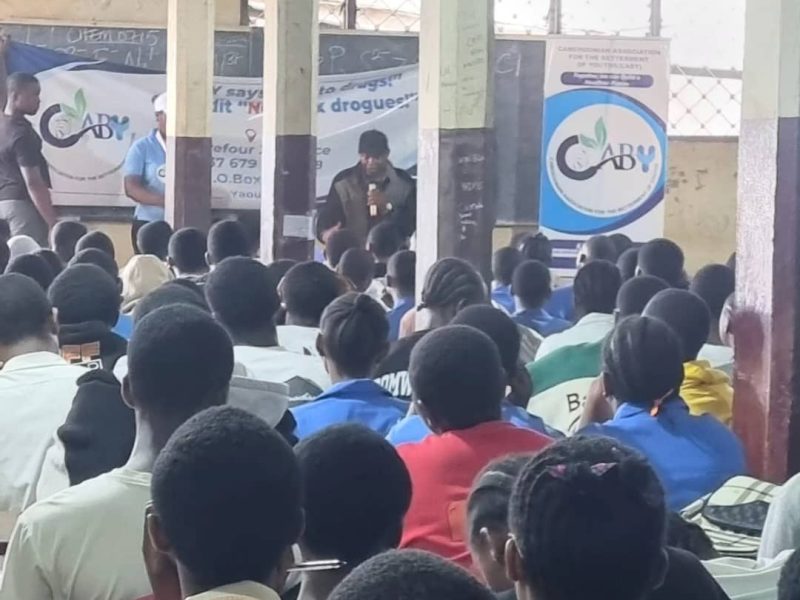
Sustainable youth development is impossible without deep, genuine community engagement. CABY’s community engagement strategy is built on the principle that communities are not passive recipients of development — they are the primary agents of their own transformation. Our role is to facilitate, support, and amplify community-led processes of change, not to impose external solutions.
Our community engagement programs operate through a network of locally-based Youth Community Centers, each staffed by local youth workers and governed by community advisory councils. These centers serve as hubs for program delivery, community dialogue, and youth organizing — providing a permanent, accessible presence in communities that outlasts any individual project or funding cycle.
Community engagement is embedded across all of CABY’s program areas. Every initiative begins with community needs assessment and participatory planning; every program is implemented with meaningful youth and community involvement in decision-making; and every initiative includes robust feedback mechanisms that ensure communities can hold CABY accountable to their needs and expectations.

CABY’s advocacy strategy is grounded in the recognition that individual and community-level change, while essential, is insufficient on its own to address the systemic barriers that limit youth development in Cameroon. We must also work to change the policies, laws, institutional practices, and social norms that perpetuate youth exclusion and vulnerability.
Our advocacy agenda includes: strengthening national drug prevention policies; increasing government investment in youth services and infrastructure; reforming education curricula to better equip youth for the modern economy; expanding access to healthcare and mental health services for youth; and ensuring meaningful youth participation in national development planning and governance processes.
CABY’s advocacy work is evidence-based, youth-centered, and conducted in coalition with other civil society organizations, academic institutions, and international partners. We engage through constructive dialogue with government partners at national and local levels, while also mobilizing public support through media campaigns and community sensitization.
These six strategic objectives define what CABY commits to achieve over the next five years — with measurable targets, clear interventions, and defined outcomes for each.
Increase access to quality education and vocational skills training for 8,000 out-of-school and at-risk youth across five regions of Cameroon by 2028.
Interventions: Partner with 50 technical and vocational schools; establish 10 youth skills centers; provide scholarships for 500 youth; deliver digital literacy training to 3,000 youth.
Target: 8,000 youth trained by 2028
Expected Outcomes: 70% of trained youth gain employment or start businesses within 12 months; school re-enrollment rates increase by 30% in target communities.
Deliver comprehensive health promotion and drug abuse prevention programs to 10,000 youth, reducing substance use rates and improving mental health outcomes in target communities.
Interventions: Train 200 peer health educators; conduct 500 school-based prevention sessions; establish 15 youth-friendly health clinics; launch a national drug prevention media campaign.
Target: 10,000 youth reached by 2028
Expected Outcomes: 40% reduction in reported substance use among program participants; 60% of participants report improved mental health and well-being.
Support 3,000 youth to achieve sustainable livelihoods through vocational training, entrepreneurship development, access to finance, and job placement programs by 2028.
Interventions: Establish a youth enterprise fund capitalized at 50 million FCFA; partner with 20 private sector employers; deliver entrepreneurship training to 1,500 youth; provide startup grants to 300 young entrepreneurs.
Target: 3,000 youth employed or self-employed by 2028
Expected Outcomes: 65% of beneficiaries maintain sustainable income 18 months after program completion; 500 new youth-owned businesses established.
Mobilize 5,000 youth as active citizens and community leaders through civic education, leadership development, and platforms for meaningful youth participation in governance by 2028.
Interventions: Establish 100 youth civic clubs; organize annual national youth leadership summit; conduct voter education campaigns in 30 communities; support 50 youth to participate in local governance structures.
Target: 5,000 active young citizens by 2028
Expected Outcomes: Youth voter registration increases by 40% in target communities; 50 youth elected or appointed to community leadership positions.
Build the resilience of 50 communities to protect youth, support at-risk young people, and sustain positive social change beyond the life of CABY's direct programming by 2028.
Interventions: Establish community youth protection committees in 50 communities; train 500 community volunteers as youth mentors; develop community-led monitoring systems; build capacity of 20 local partner organizations.
Target: 50 resilient communities by 2028
Expected Outcomes: 80% of communities sustain youth protection activities after project closure; local government youth budgets increase by 25% in target areas.
Achieve measurable improvements in national and regional policies affecting youth development, and increase government and private sector investment in youth services by 2028.
Interventions: Publish annual Cameroon Youth Status Report; convene national youth policy dialogue; submit evidence-based recommendations to 5 government ministries; build youth advocacy coalition of 100 organizations.
Target: 5 policy wins by 2028
Expected Outcomes: National drug prevention policy strengthened; youth employment fund established by government; youth participation in national development planning formalized in law.
These three cross-cutting themes are embedded in every program, every partnership, and every decision CABY makes throughout the 2024-2028 strategic period.
All CABY programs are designed and implemented with an explicit commitment to gender equality and the inclusion of the most marginalized youth — including girls and young women, youth with disabilities, internally displaced youth, and youth from ethnic and religious minorities. We track disaggregated data by gender, age, and vulnerability status to ensure our programs reach those who need us most.
CABY cannot achieve its ambitious 2024-2028 vision alone. We will deepen and expand our partnership ecosystem — working more strategically with government at all levels, mobilizing greater private sector engagement, strengthening relationships with international development partners, and building a vibrant national coalition of civil society organizations. Our partnership approach prioritizes genuine, equitable collaboration.
Cameroon's extraordinary cultural diversity — with over 280 ethnic groups and both anglophone and francophone populations — demands that CABY's programs be deeply culturally sensitive and locally rooted. We work through local staff and community partners who understand the specific cultural context in which they operate. Local ownership is not a buzzword for CABY — it is the foundation of everything we do.
CABY’s M&E framework is designed to track progress against our six strategic objectives, generate learning to improve program quality, and demonstrate impact to donors and partners. We use a balanced set of indicators covering outputs, outcomes, and impact — with data collected through a mix of quantitative surveys, qualitative case studies, and participatory evaluation processes involving youth and communities.
Our M&E system is built for learning, not just accountability. Quarterly review meetings bring together program staff and community representatives to analyze data, identify what is working and what needs adjustment, and make evidence-based decisions about program adaptation. Annual external evaluations provide independent assessments of progress.
CABY’s Strategic Plan 2024-2028 is an ambitious but achievable vision for what is possible when communities, organizations, governments, and individuals commit together to investing in young Cameroonians. The evidence is clear: investments in youth development yield extraordinary returns — for individuals, for families, for communities, and for the nation as a whole. The time to act is now. We invite you to join us on this journey — and together, let us build the Cameroon that its youth deserve.